
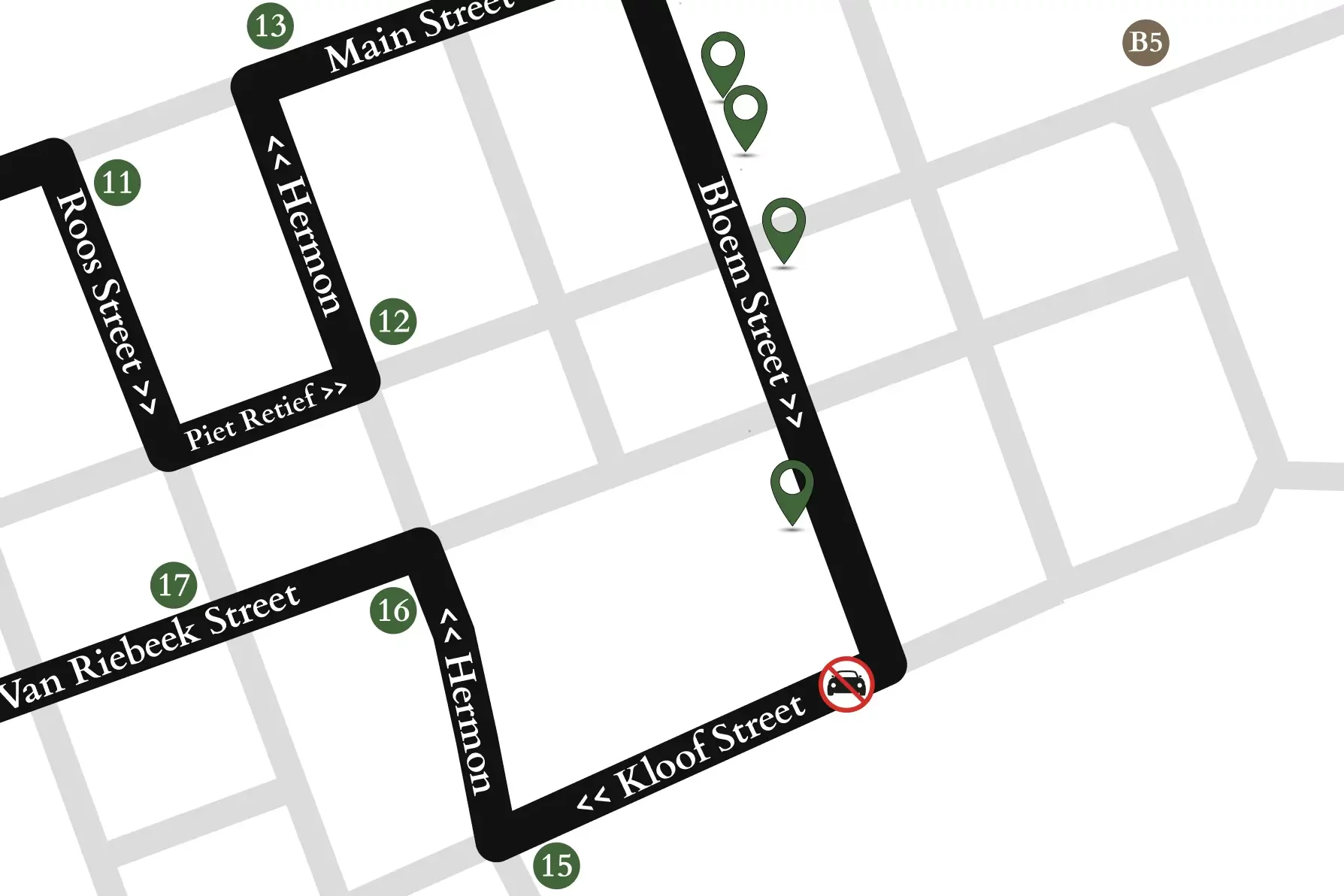
Bloem Street, being off the main roads of Riebeek Kasteel, has a historically rustic and simple architecture similar to that of Roos Street.
The main difference is that Bloem Street properties were originally small holdings with an expanse of land into the valley behind each house, which enabled a mixed usage for residential and small-scale farming.
Old Oak Cottages
The first couple of old houses on Bloem Street are number 10 and 12, respectively, on the left-hand side from the direction of Main Street.
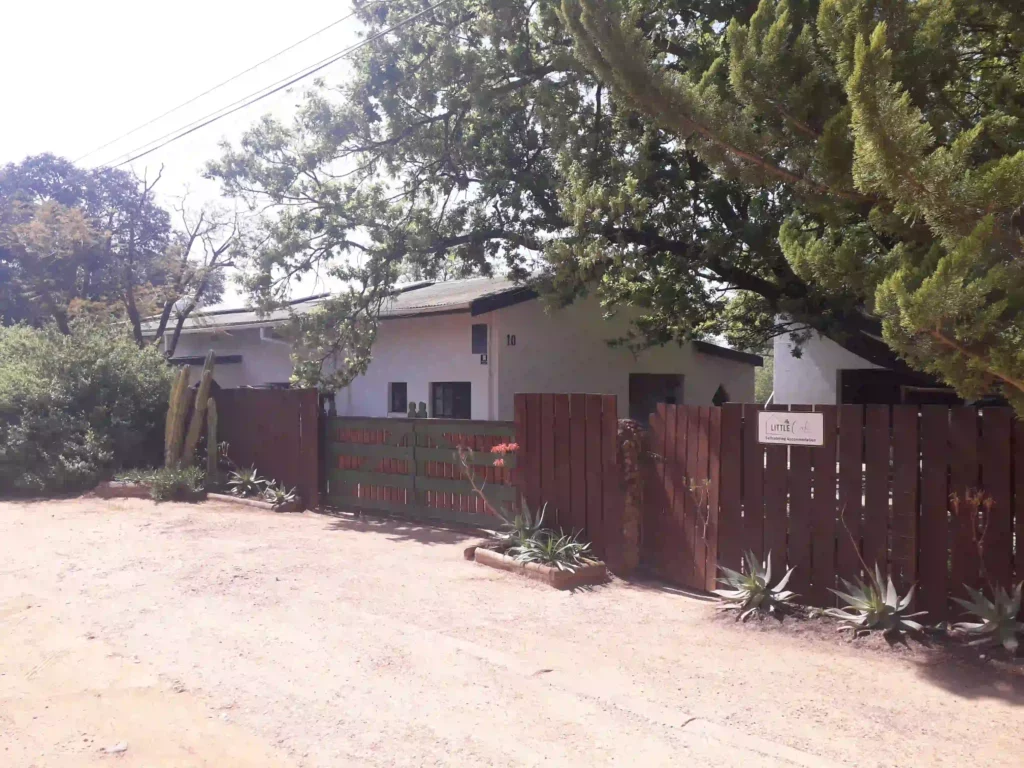
Number 10 is a house that dates back well into the 1800s and its outbuilding can be seen alongside, which is now used as a garage. Various alterations over time have unfortunately reduced the original heritage appeal of the building. The stoep with diamond-shaped side windows is at the back of the house, unusually facing away from the road.
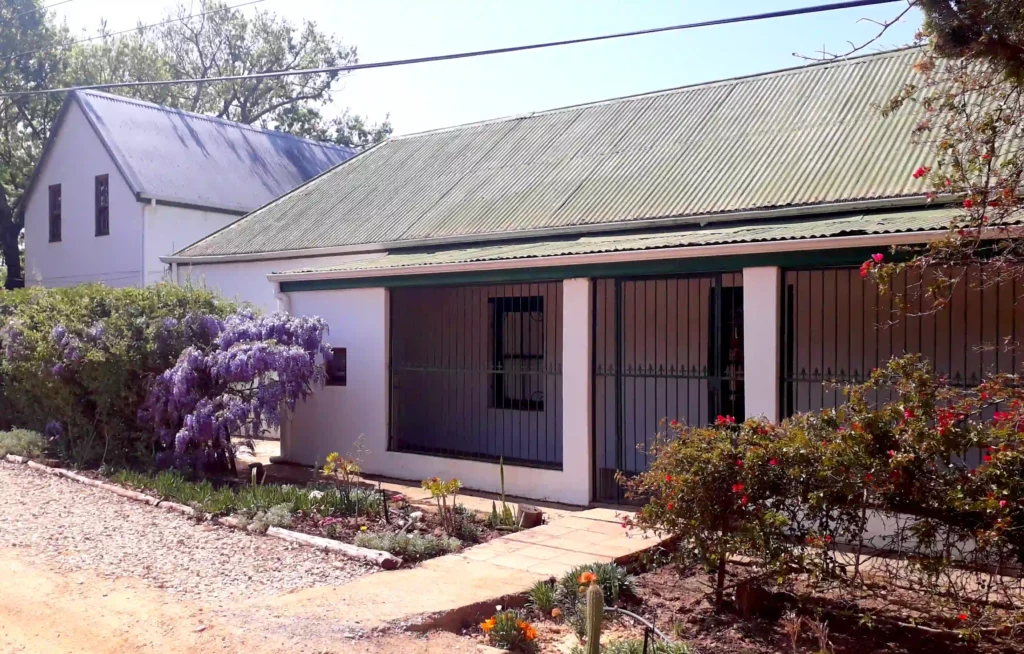
Next door, number 12 is closer to its original condition although it has similarly suffered from minor alterations. It was occupied by a curious couple in the mid 1900s who were devoutly traditional and only wore Voortrekker outfits.

Locals recall that the man who lived here would wear kruisbande (suspenders) instead of a belt, and his wife was only seen wearing traditional dresses and a kappie (bonnet). For some reason, the man refused to drive a vehicle or do shopping in Riebeek Kasteel, and so he would often be seen carrying supplies while cycling to and from Riebeek Wes.
Churchman’s House
Down Bloem Street on the south-eastern corner across Piet Retief Street is another old house that is scarcely visible from the street due to the surrounding plants today.

The house has a hip roof with an enclosed lean-to extension on the street side as well as a stoep facing the garden at the back, oriented similarly to number 10 which seems to be a trend on Bloem Street.
The man who lived here in the 1900s was on the local Dutch Reformed Church board and he was very well-known for his regular endeavours to raise money for the church and its activities.
Burger’s Tobacco Barn
Carrying on down Bloem Street and over Van Riebeek Street is Jan Burger’s old house and tobacco barn at number 25 on the right-hand side.
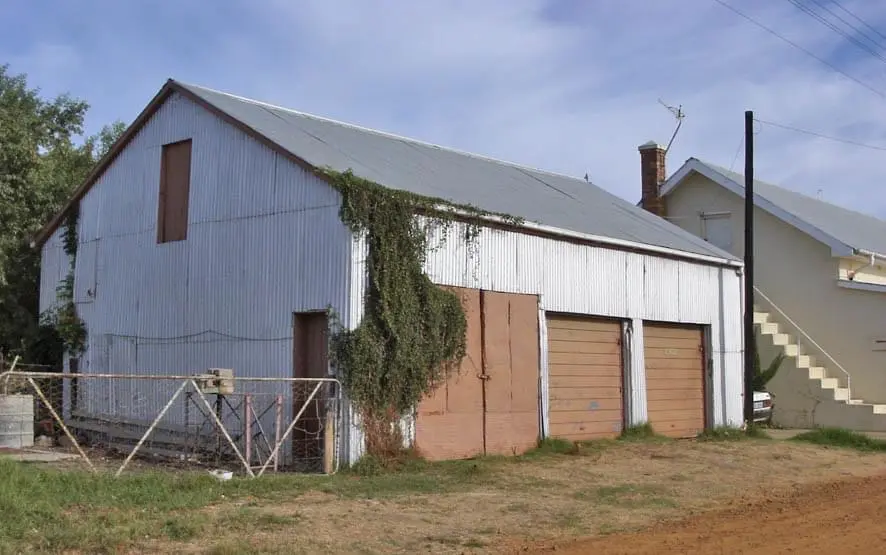
From just before the 1950s up until 2000, farming Turkish tobacco was very popular in Riebeek Kasteel, particularly in the low-lying areas of the valley. Jan Burger was one such farmer, who built this barn while living in the house next door and farming his tobacco on the then vacant land below.
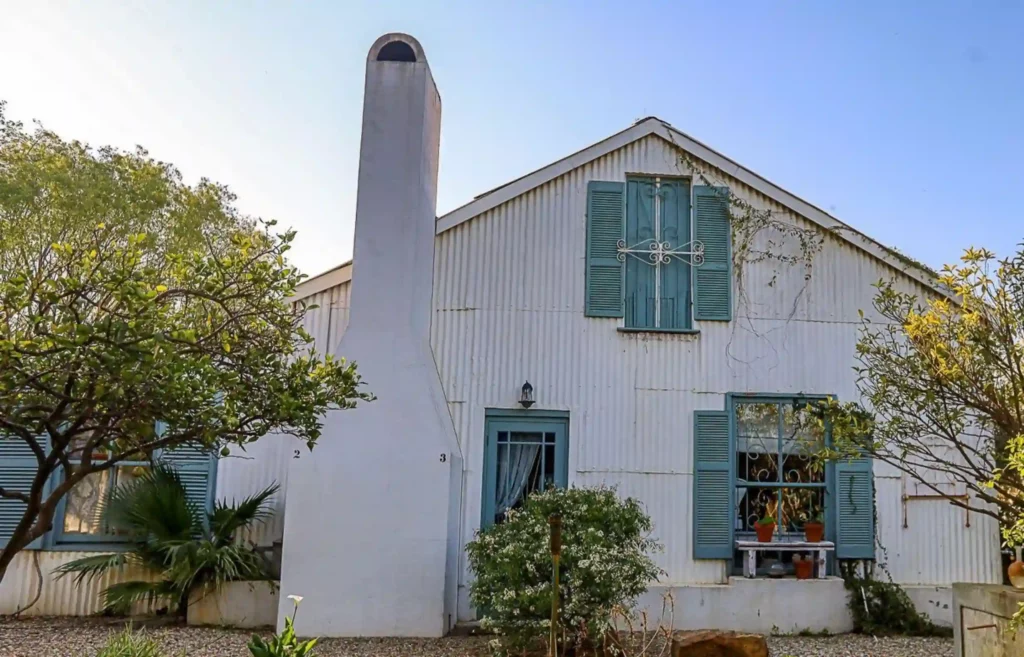
The barn was built for purpose and consisted of large entries and panels of corrugated steel sheet cladding. The attic space was used for hanging and drying tobacco, which was the ideal spot given its good air circulation and heat. The ground floor was used for processing and packing the tobacco as well as storing his farming implements.
The house, barn, and farm have since been divided into separate properties. While the house is actually older than the barn, it has unfortunately lost most of its heritage features and appeal following a 60s style alteration.
The barn – while converted into a home with the addition of a back extension, windows, shutters, and doors – has retained its general footprint and appearance with its unique corrugated sheet cladding.
Off The Track
At the end of Bloem Street, turn left onto Kloof Street instead of right for additional off the track heritage locations: Moreson Manor is 500m away, Vleitjies is 700m, and Zonquasdrift is 8km over the railway tracks and through the farmlands gravel road.
Your Next Destination
Continue to the end of Bloem Street and turn right onto the gravel section of Kloof Street. Note that thoroughfare for vehicles is blocked. Four heritage locations await at the tarred crossing of Hermon and Kloof Street.
