
In 1699, Willem Van der Stel – governor of the Cape Colony – named the Riebeek Valley and Tulbagh the “Land of Waveren” and divided the land into large farms including Vlysbank; one of the earliest establishments in the valley which was granted to Hendrik Venter in 1704.
Its name loosely translates to “Staging Post”, alluding to its orginal purpose as a cattle holding and trading station given its accessible position along the Berg River and proximity to connecting roads, with livestock trade often destined for the ships in Cape Town.
A series of cannons could be heard firing throughout the cape when ships arrived at the docks with supplies and spices, one of which was placed near the top of Kasteelberg. Through this signal, farmers were notified to start the trek to gather their produce for trade or collect imported goods from Vlysbank.
Many of the original architectural elements remain and are integrated into the current Du Vlei guesthouse. The old barn has been converted into a guesthouse, featuring individual rooms consisting of the old wine cellar, the milking and creaming room, the granary including attic storage space, and the stone mill.

The enormous and untamed logs of wood used as structural beams are present throughout the barn, while the passthrough in the centre of the barn displays the original horse harness and straps hanging from square nails pegged into the beams.
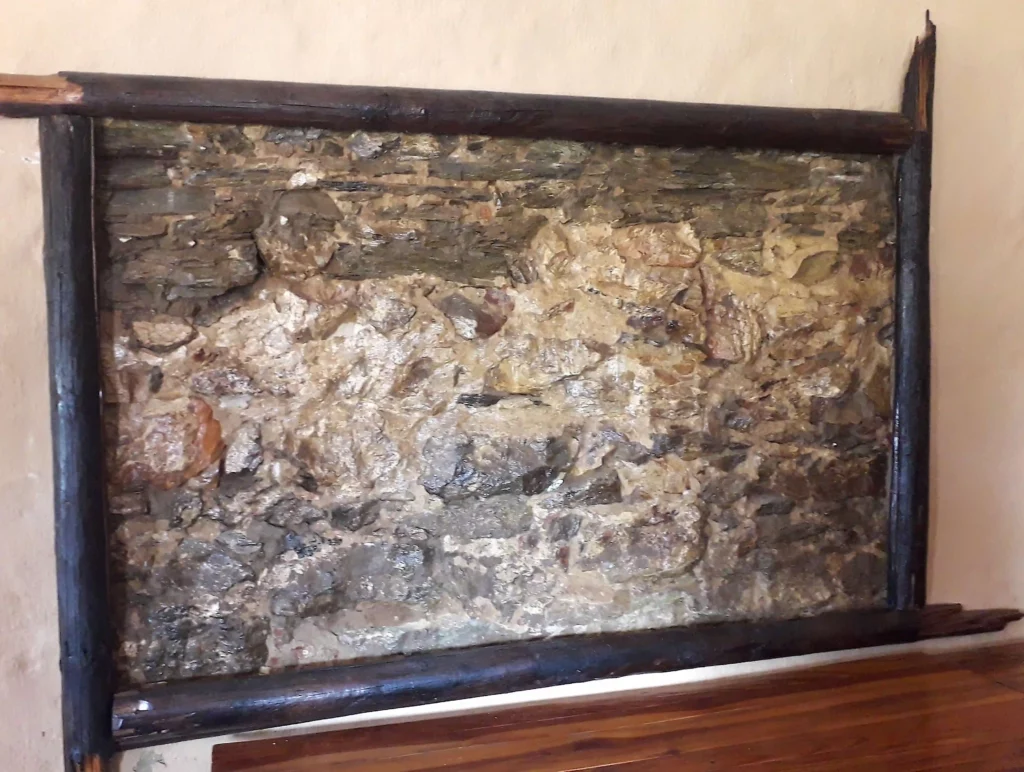
The venue on the southern side of the barn features a purposefully exposed section of the original clay and stone walls.
The H-shaped homestead to the north, now converted into multiple self-catering lets, displays the large stoep, original kitchen and stove, yellow wood doors and floors, as well as oregon pine framing.
Vlysbank’s first owner – Hendrik Konrad Venter born in Hamel, France – arrived in South Africa with the Dutch colony. He and his wife, Anna Viljoen (originally “Villion” in French), started off in the Cape as the owners of the Nazaret farm in Stellenbosch.
They settled at Vlysbank soon after being granted the farm in 1704, leaving Nazaret to the Viljoens and Anna’s brother. Since Hendrik was a tailor by trade, he had to quickly adapt to farming in the wild and sometimes harsh conditions in the valley.
Smallpox made its way to the Cape in 1713 via ships from Europe, which infamously ravaged through villages and common trade routes including Vlysbank. Hendrik died of the affliction in 1713 at the age of 49, followed by Anna only 9 days later. The old cemetery at the Dutch Reformed Church of Riebeek Kasteel has a memorial stone dedicated to Hendrik and Anna Venter.
While many of the Venter’s children died young, they left behind a son and two daughters – the eldest being Pieter, aged 13 – who were too young to take over the farm at Vlysbank and were returned to the Viljeons from Anna’s side in Stellenbosch.
The Venter lineage that permeates throughout South Africa today can therefore be traced back to its roots in Vlysbank, Hendrik Venter, and his only surviving son, Pieter.
Following the sudden death of the Venters in 1713, Vlysbank was transferred to Nicolaas Gockelius, a VOC soldier who had arrived in the Cape from Europe. Almost a century later in 1821, Vlysbank was transferred to Mattheijs Michielse Laubscher, a son of the prominent Laubscher family who also owned Allesvorloren at the time.
The name “Vlysbank” – although spelled as such in the governor’s original grant to Hendrik Venter – has been referred to over time with many different iterations of its name, including “Vleischbank”, “Vleesbank”, “Vleisbank”, and more.
Off The Track
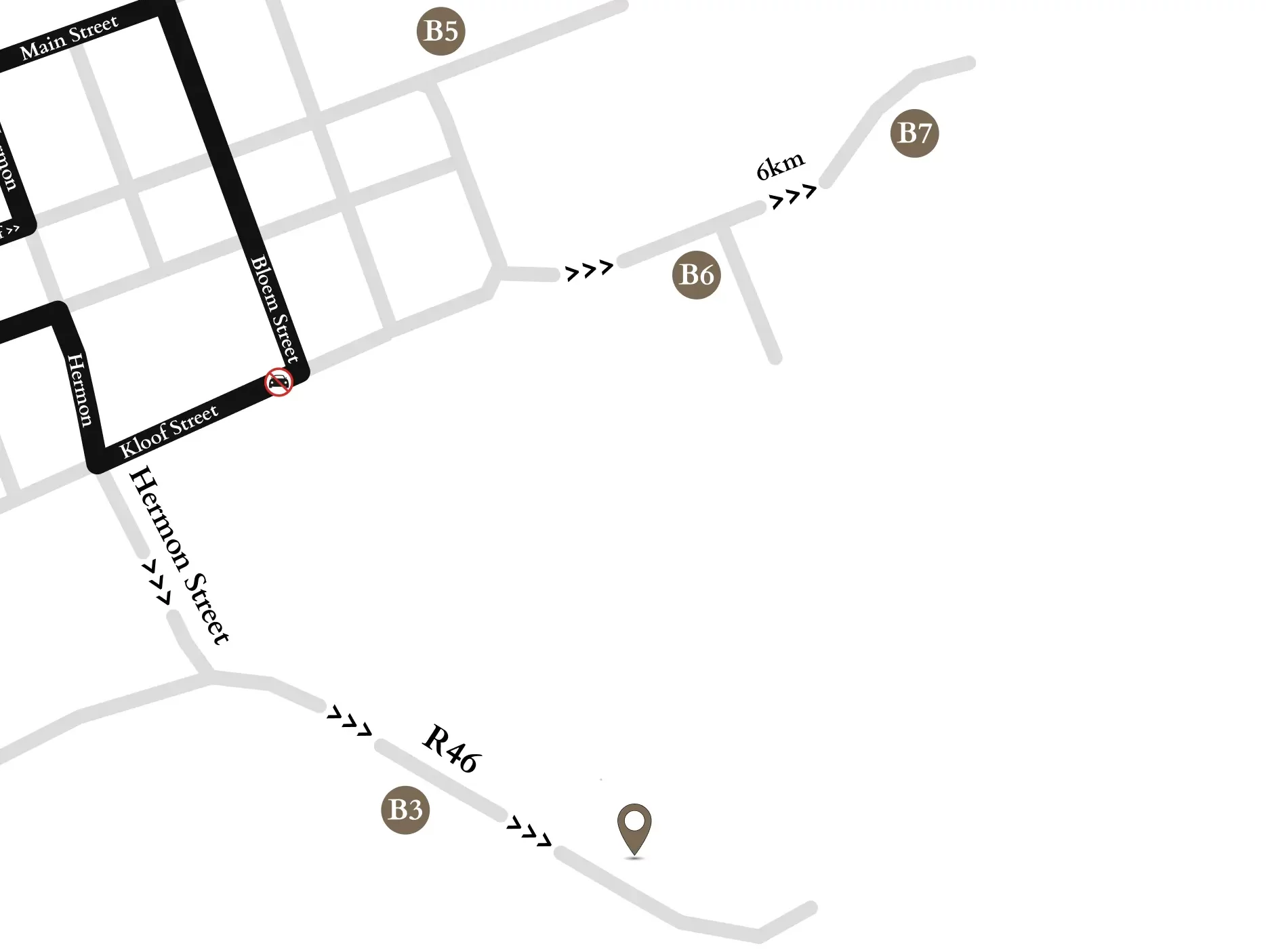
Return to Riebeek Kasteel via Hermon Street, then turn right onto Piet Retief Street. The next destination is Moreson Manor, which is on the left side of the bend of Piet Retief Street where it becomes a gravel road.
