
The cornerstone of De Oude Kerk, marking its establishment, was laid on 8 August 1855. This followed a decision made at a meeting of locals at Jacobus Laubscher’s home of Allesvorloren to establish a Dutch Reformed Church congregation in Riebeek Kasteel. Nicolaas Walters of Twist donated the 271 square yards of land while other locals contributed to funding for the build.
Before De Oude Kerk was built, the joint congregation of Riebeek Wes and Kasteel would meet for worship on Sundays at the Walters’ homestead, currently where The Barn restaurant is up the road on Church Street. A disagreement ensued after the people of Riebeek Wes were unhappy about Riebeek Kasteel getting its own dedicated church and congregation.
These arguments gave rise to the name of the Walters’ farm: Twist (Dutch for struggle/disagreement), and it also delayed the congregation of Riebeek Kasteel and De Oude Kerk being granted independence until 1863.
Between the 1855 construction of De Oude Kerk and the congregation’s independence, various pastors from nearby regions would hold informal services at the church in the capacity of a consultant, often once a quarter on Wednesdays.
Once the congregation gained independence, it sought to hire its own pastor. Due to the lack of financial means and the need to construct Die Pastorie higher up on Main Street, the congregation could only offer a low salary to prospective pastors, so much so that the first few offers were declined.
Ds. Johannes Hauman from Namaqualand was the first pastor to answer the call in 1880, however, his arrival was delayed until the completion of the parsonage and he was confirmed on 8 April 1881.
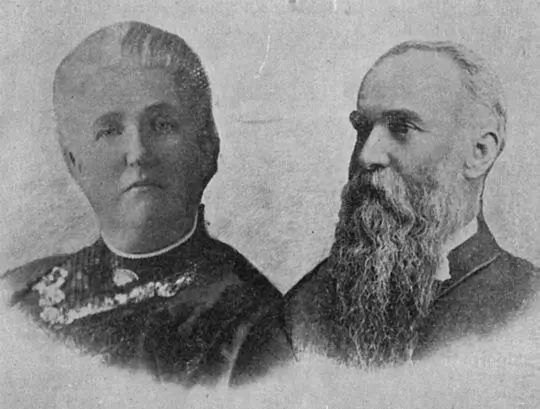
That same afternoon, Ds. Hauman delivered his inaugural sermon based on 2 Corinthians 12:9: “And He said to me: My grace is sufficient for you, for My power is made perfect in weakness. Therefore, I will boast all the more gladly in my weaknesses, so that the power of Christ may rest upon me.”.
Ds. Hauman was an enthusiastic supporter of missionary work. He established a small mission church in the valley named Oukloof on Kloof Street and, without any compensation, preached the gospel to the non-white community in his free time. In 1908, Ds. Hauman accepted a call to minister to lepers on Robben Island. After 10 years, he retired, and on July 24, 1925, he passed away at his home in Mowbray.
The next pastor, Ds. Pieter De Waal, would go on to expand the Riebeek Kasteel congregation and commission the construction of the new church building in response to the sheer growth of its constituents. Once the new Dutch Reformed Church was built in 1915, De Oude Kerk took up the mere status of a church hall. However, it is reported that for much of this time in the 1900s it was in fact used as a storeroom for a local building contractor.
The Riebeek Valley Museum which stands in De Oude Kerk today was first opened on 29 October 1988 as part of the 125-year celebration of the Riebeek Kasteel Dutch Reformed Church congregation. In 1991, it was declared a national heritage site.
Additional information about the history of the Dutch Reformed Church congregation of Riebeek Kasteel can be found on the Wikipedia page.
Off The Track
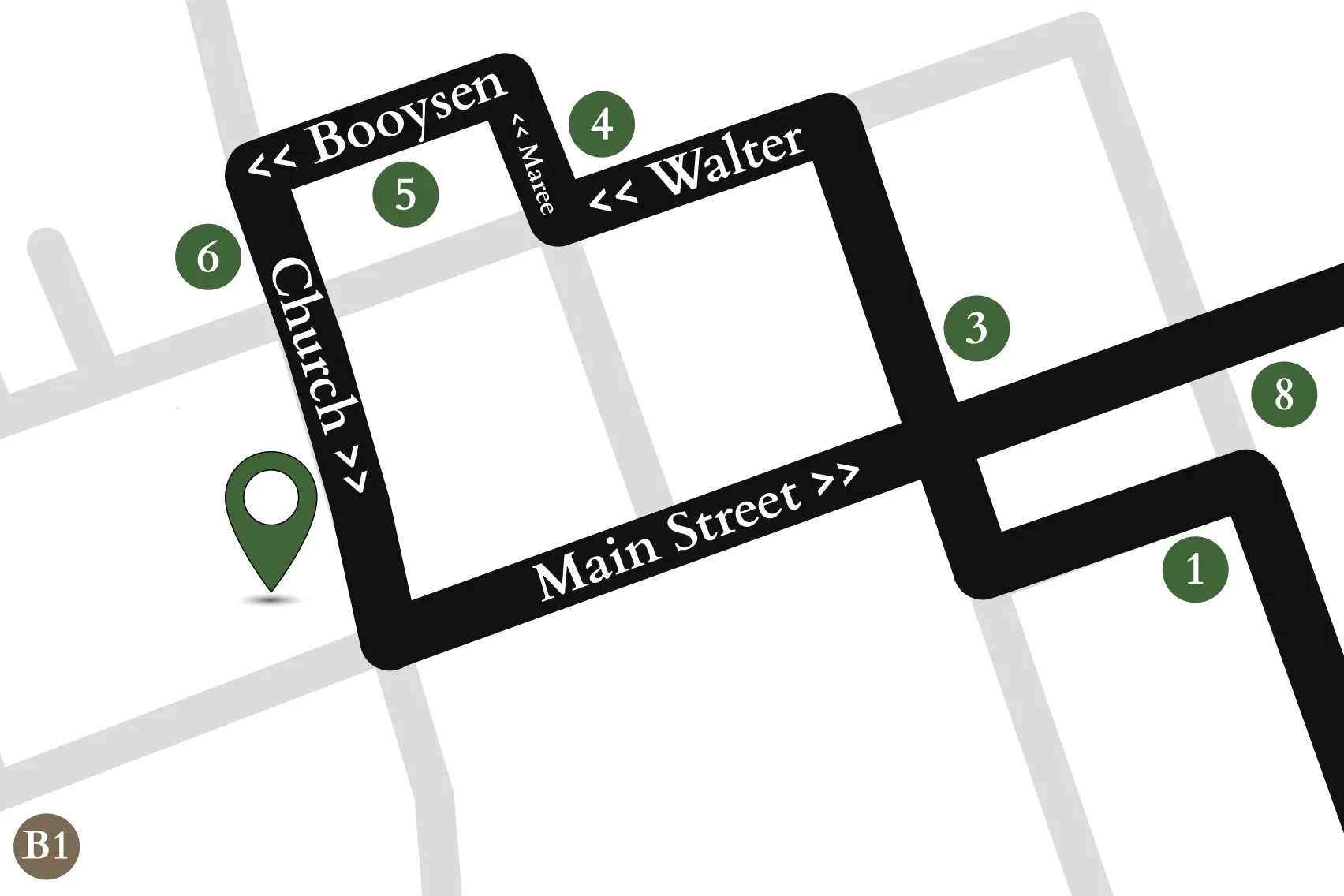
Die Pastorie is located about 100m up Main Street from the De Oude Kerk, at the bend of the road on the left-hand side.
Your Next Destination
Turn left and head down Main Street, and carry on about 200m into the centre of the village. The next destination is Shopkeepers: A series of heritage commercial buildings starting at the property on the corner of Main and Sarel Cilliers Street.
