
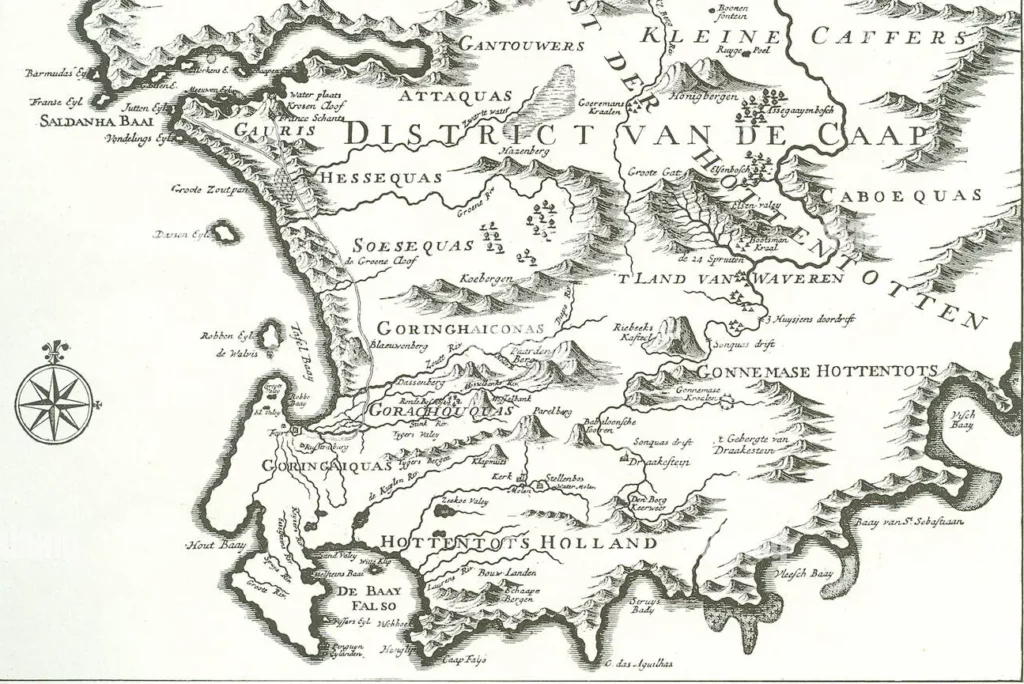
The Riebeek Valley was discovered in 1661 by an expedition of the Dutch East India Company (VOC) on their route to the north in search of gold and the Kingdom of Mutapa: Africa’s fabled city of gold or El Dorado according to the Portuguese, which never materialised.
Pieter Cruythoff, the leader of the expedition, first sighted the fertile valley after summiting Bothmaskloof Pass from the west. The area was inhabited by the Khoi Sanquas, who were hunters, and Khoikhoi, who were cattle farmers. In addition to the indigenous inhabitants, the expedition noted the valley being rife with wildlife including antelope, rhinoceros, hippopotamus, and lion; one of which had stalked the expedition for days leading up to their arrival at the valley.

The mountain “Riebeeck’s Casteel” was named in honour of the Cape Colony governor, Jan van Riebeeck, who never actually laid eyes on the region himself. The general area of Riebeek Kasteel was originally referred to as “Mossienes” (Sparrow Nest), while Riebeek Wes was known as “Vinknes” (Finch Nest).
In 1699, Willem van der Stel – the governor of the Cape Colony at the time – established the “Land of Waveren” which extended across the Riebeek Valley and Tulbagh regions as we know them today. The interest in populating the valley were two-fold: To establish hunting grounds and agricultural activity to increase trade and supplies for the colony and its ships; as well as to increase the general footprint of the colony.
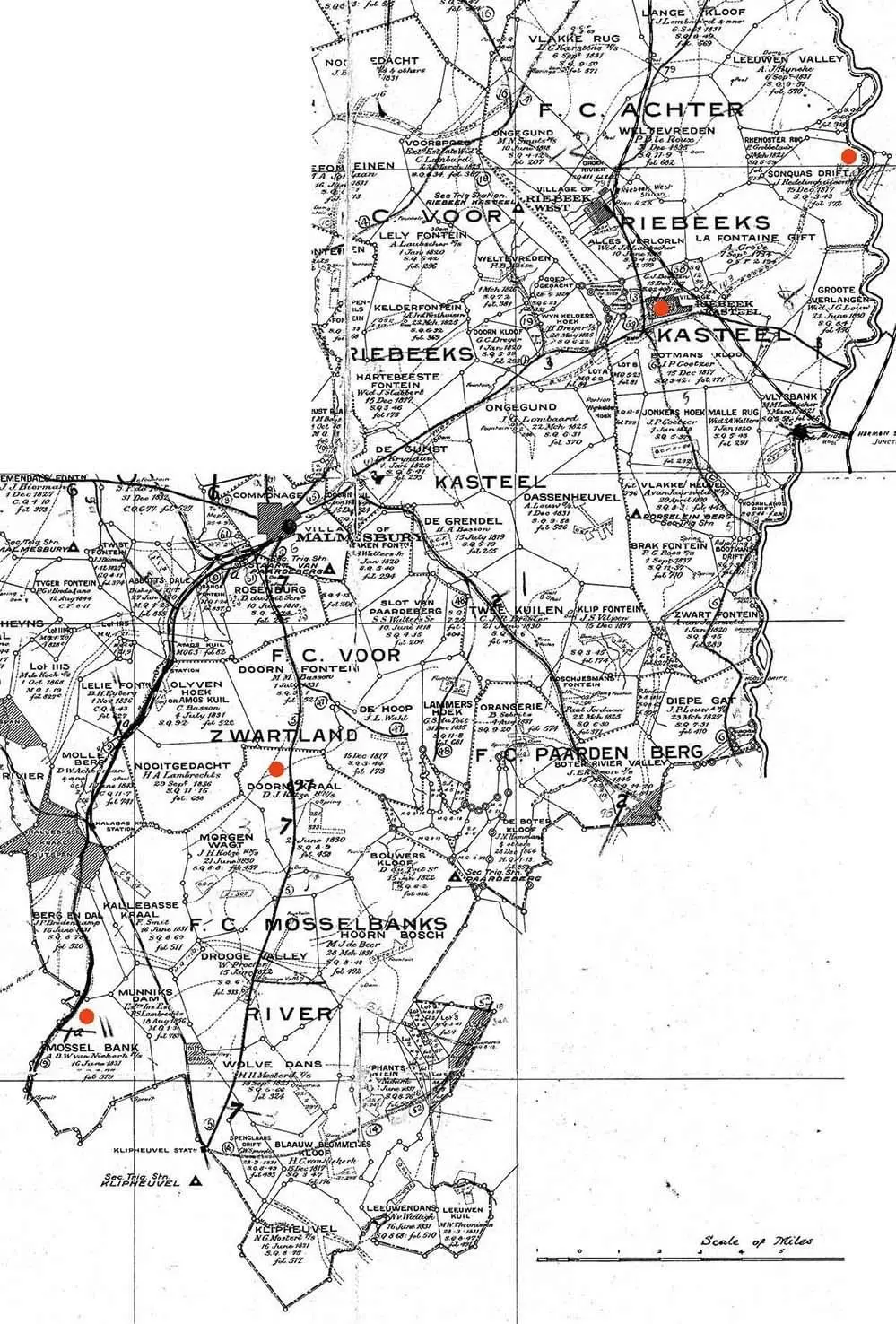
In 1704, shortly after Van der Stel visited the region, he granted loan-places for the first farms in the valley including Clovenburg, Allesverloren, Goedgedacht, and Vlysbank. Allesvorleren originally stretched across most of today’s Riebeek Wes and part of Riebeek Kasteel, while Clovenburg covered the pass and the rest of the general village of Riebeek Kasteel.
The farmers granted these loan-places were required to provide preferential trade to the colony for produce such as meat, wine, and grain. As such, hunting and grazing licenses were handed out to some farms, namely Jan Botma of Clovenburg who today has Bothmaskloof Pass named after him. Hendrik Venter was awarded Vlysbank, while the widow Catharina Cloete received Allesverloren which infamously was given its name “All is lost” after it was burned to the ground by Khoi marauders in 1704.
Early settlers of the valley consisted of Dutch colonists – not only people from the Netherlands, but also surrounding regions such as Austria, Germany, Hungary, and Switzerland – as well as French Huguenots. This mix brought about an array of cultures and skills, including the ability to raise cattle, farm grain, and establish vineyards.
Due to the lack of resources and the need for shelter, the very first settlers would build themselves a rustic “hartbeeshuis” or “matjieshuis” on their land, not altogether dissimilar and probably less sophisticated when compared to the housing of indigenous Khoi people. These were like huts and the structure resembled an upside-down boat, with a frame made out of bent wooden poles covered in animal hide or reed.

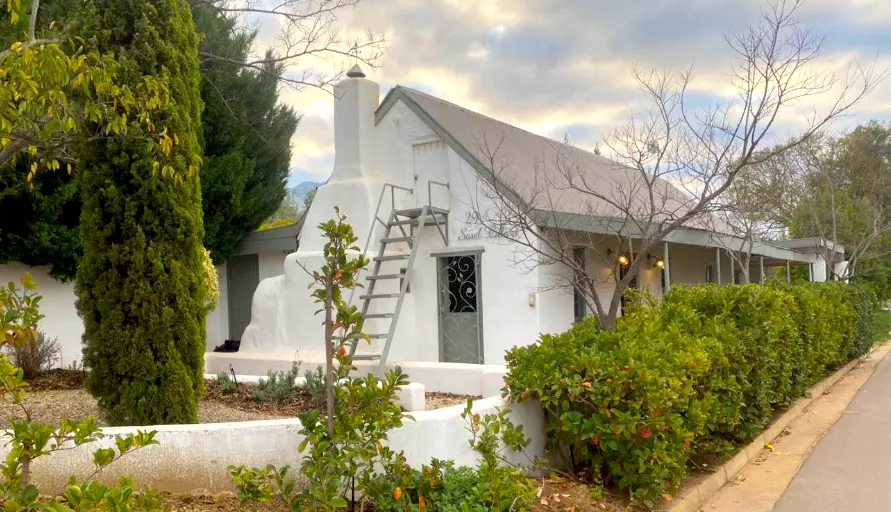
Around the mid 1700s, barns and homesteads were being constructed out of the natural resources available in the area. The earliest buildings, some of which are still standing today albeit with alterations, had walls made out of rock and clay with raw log beams and trusses making up the roof structure clad with thatch.
The original barns were commonly rectangular buildings with a gable roof, featuring an external chimney on the one gable-end housing a fireplace accessed from the interior. Alongside the chimney, a ladder or rickety staircase would lead up to a small door for accessing the solder (attic) where grain and foodstuffs would be stored for drying and to keep away from rodents. Some of these rectangular barns were later replaced or extended into H, T, and U-shaped homesteads.
In contrast to Paarl and Stellenbosch with some of their lavish Cape Dutch / Victorian buildings established by increasingly wealthy farmers, the inhabitants of the Riebeek Valley had a more modest and survivalist approach to their lifestyle and architectural design which lasted for many years and arguably to this day, hence the highly unique and quaint barn-style architecture scattered throughout the valley.
Farming activities in the 1700s were focused on sustenance and trade which included cattle, sheep, grain, vineyards, and fruit orchards. Farmers would work the land through the use of horses/mules, oxen, and wagons.
While pre-existing indigenous trees such as Yellowwood and Stinkhout were felled for construction, the Dutch settlers also began planting alien trees for practical reasons: Western European Oak for alleys and land demarcation, Grey Poplar on the river banks for roofing timber, Spanish Reed for thatch construction, and Cluster Pine for the production of fruit boxes and wood wool.

To understand the post-settler society in the valley from the mid 1700s to the mid 1800s, one needn’t look much further than the stories of three historically prominent families: Basson who originated from Wesel in Germany, Laubscher from Fribourg in Switzerland, and Walters from Pressburg in the Kingdom of Hungary. Amongst others, these families would go on to dominate land ownership and influence development in the valley for well over a century.
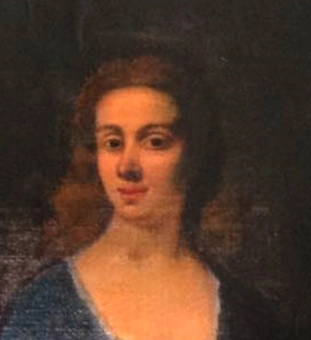
Laubscher, Cloete – born 1693
The three families became closely connected through multiple interlinked marriages of cousins and such, likely as a means to keep important land in the family. A few streets in the Riebeek Valley are named after them, and many of their graves are stone-marked in the two old cemeteries.
Highlighting a Basson generation of the mid 1700s gives a snapshot of what was going on; specifically, the smart connections established by the siblings Helena, Willem, Sophia, and Catharina – who also happened to be Walters from their mother’s side.
It’s worth a quick mention that the Bassons originally came to wealth primarily through the inheritance from their great-grandmother, Angela of Bengal (Basson). Angela was born in India in 1641 and was one of the earliest known slaves of the Cape Colony under Jan van Riebeeck. Her first child was the famous and wealthy socialite, Anna de Coningh – wife of Olof Bergh and owner of Groot Constantia – following which Angela would go on to have seven children with her husband, Arnoldus Basson. Angela’s incredible story and rise to wealth following her emancipation from slavery in 1666 would set up the Bassons for generations.
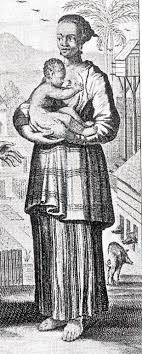
Angela of Bengal
Sophia Basson married Nicolaas Laubscher in 1759 and they had eight children together. Nicolaas was the twin brother of Rúdolph, and already had children from his previous marriage to the late Elizabeth Lombard. This generation of the Laubschers originated from their farm Nooitgedacht in Stellenbosch and Nicolaas was the owner of Weltevreden in the valley, and Sophia would gain her first right to land ownership through this marriage.
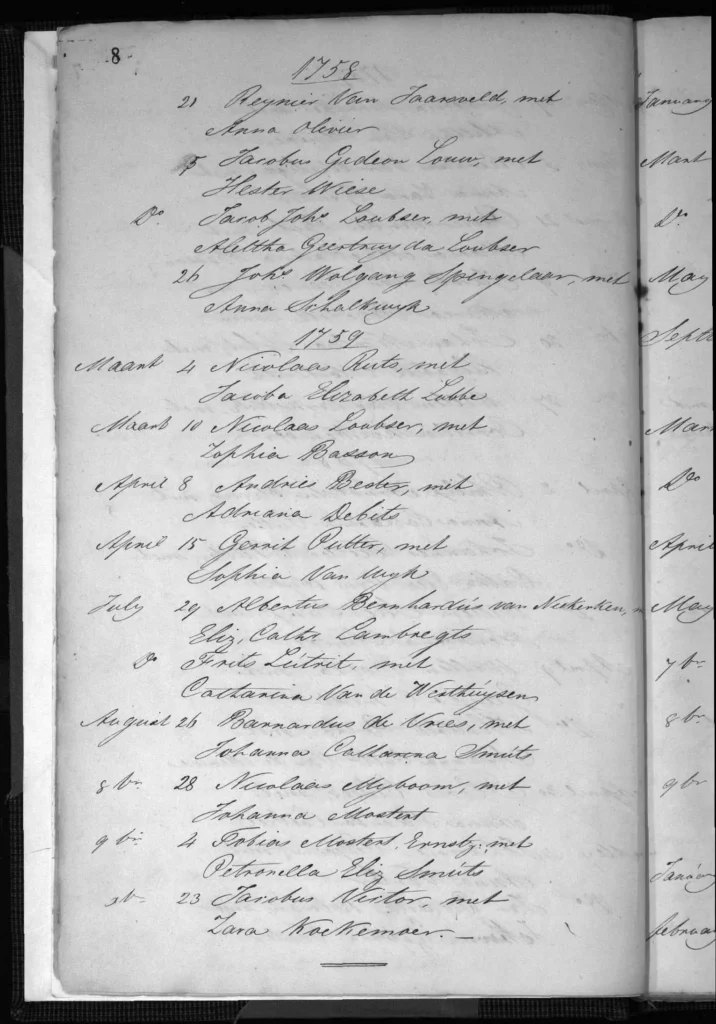
Sophia Basson’s marriage in 1759
Shortly after Nicolaas died in 1769, Sophia would find herself with exceeding wealth and land via her subsequent marriage in 1770 to Heinrich Witsche – the owner of Clovenburg through inheritance from his late first wife, Susanna Mulder.
Catharina Basson, Sophia’s younger sister, got married to Samuel Walters in 1764 which similarly landed her in the butter. Samuel was the Walters’ first son and the owner of Allesverloren, which he had bought in cash through his inheritance.
Samuel died relatively young in 1777, and only three months later Catharina would find herself pregnant with Johannes Laubscher’s son before they quickly got married early in 1728. Johannes Laubscher was the late Nicolaas’ first son with Lombard, meaning that Catharina had now married Sophia’s stepson.

re-enactment of the Great Trek 1938
Meanwhile, Willem Basson had married Catharina Walters, the sister of Samuel, a few years earlier in 1761. Helena Basson was the oldest and first to get married of the siblings in 1756 to Pieter de Villiers who owned Landskroon in Paarl. Through some unclear means, one of Helena and Pieter’s children – Jacobus de Villiers – would become the future owner of Clovenburg in 1780.
Via inheritance and well-orchestrated marriages, the Basson / Laubscher / Walters families had effectively monopolised their joint ownership of several key farms in the valley and beyond before the dawn of the 1800s.
One generation later in the mid 1800s, a meeting between local families was held at the Laubscher’s farm of Allesvorleren where a resolution was made to create a Dutch Reformed congregation of Riebeek Kasteel and to build a church. Nicolaas Walters would donate a portion of his land from his farm, Twist (where The Barn restaurant is today), while the other families contributed funds for the construction of De Oude Kerk.
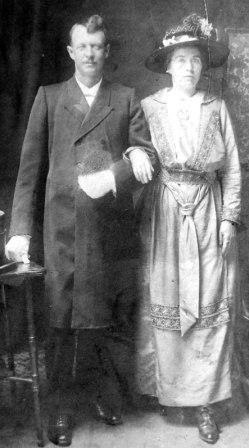
Maria Jacomina (Eelders) Walters
in 1918
Fast-forward to the late 1800s into the 1900s, the Riebeek Valley would see a relative influx of residents and wealth; although still stooped in comparison to Paarl and Stellenbosch. Riebeek Wes gained favour as the fancier part of the valley, and multiple large Victorian homes were constructed by the wealthier farmers and new residents. Meanwhile in Riebeek Kasteel, which was widely regarded as a farming village at the time, smaller Victorian homes were being built and old barns were converted into residences. The increased notoriety of Riebeek Wes into the early 1900s was partially driven by the appointment of two home-grown prime ministers: Jan Smuts and Daniël (DF) Malan.
Smuts served as the prime minister of South Africa for two 5-year stints between 1919 and 1948. He originated from humble beginnings in Bovenplaas (now the Smuts Museum), married Sybella “Isie”, and by the end of his career was lauded as a highly-intelligent military and political strategist. Smuts generally sought peace and non-racialism amidst a time of increasing pressure for racial division from the National Party.


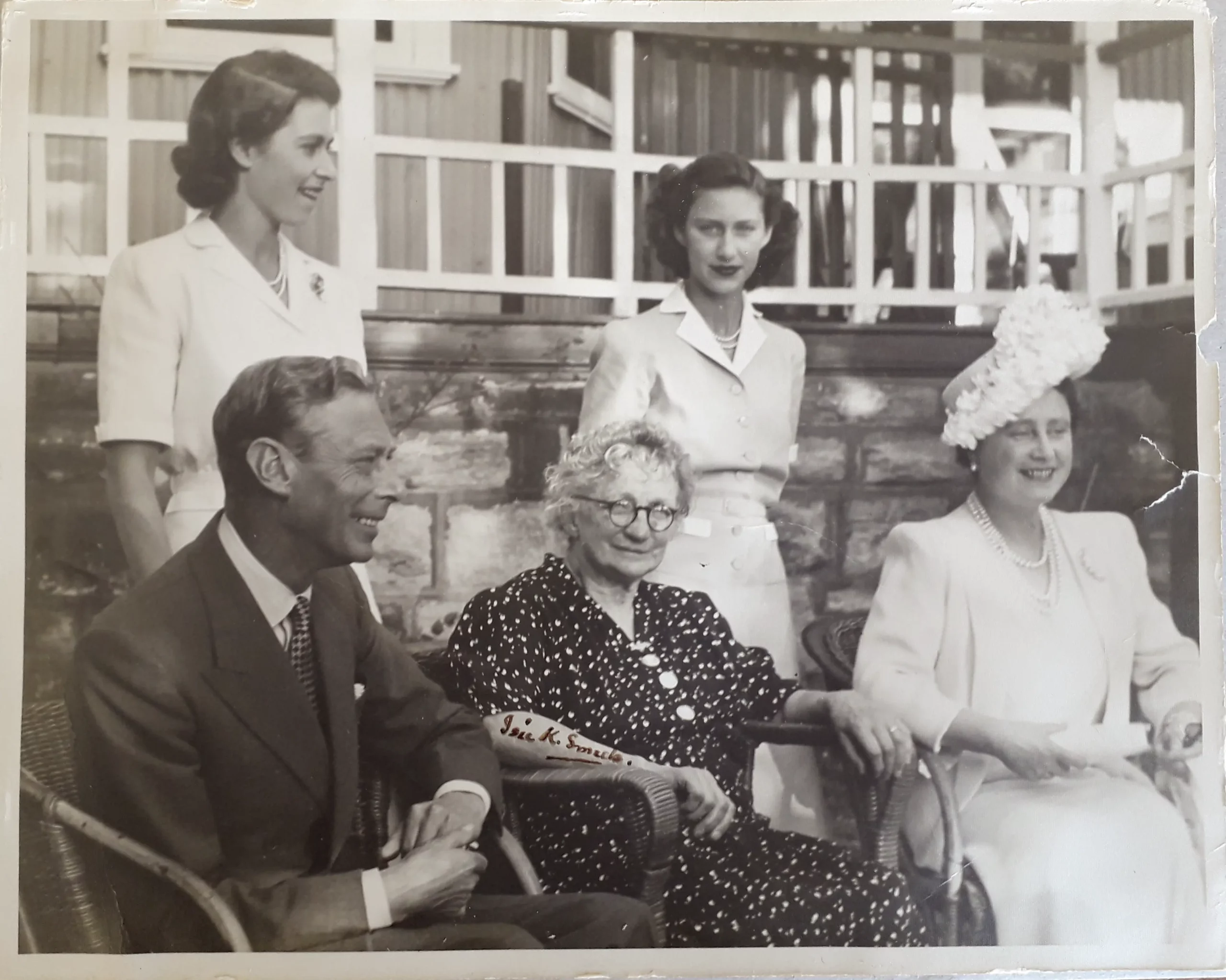
during their visit in 1947: King George VI (bottom-left), Queen Elizabeth (bottom-right),
Princess Elizabeth; to be Queen Elizabeth II (top-left) & Princess Margeret (top-right)
DF Malan from Allesverloren was subsequently elected as the prime minister in 1948. He represented the National Party and is poignantly synonymous with the introduction of the divisive apartheid laws in South Africa. These apartheid laws would infamously lead to many societal issues throughout South Africa, including the forced removal of the small rural community of Oukloof in Riebeek Kasteel.
In modern times, Riebeek Valley has evolved into a closely linked pair of quaint villages with integrated residential, farming, and touristic interests. Although subdivided, many of the original farms and families exist to this day, producing world-class wines, olive oil, fruit, and meat. Residences, guesthouses, and small shops occupy tastefully preserved and updated heritage buildings which give the valley its unique old-time feel and touristic appeal.
